
Mason Dining has proven to be a strong partner of the University Sustainability office. We have worked together to deliver signature sustainability events and initiatives, fresh produce for dining halls from the campus hydroponic greenhouse, and improved sustainability standards in the institution’s dining and catering contracts – committing to significant and specific performance metrics to improve sustainability in dining operations while providing healthy and fresh selections for the Mason community.
Check out Mason Dining’s Better Tomorrow site for more info on sustainability efforts.
Performance metrics and goals identified through partnership and specified in 2025-2035 Dining contract/other contracts include:
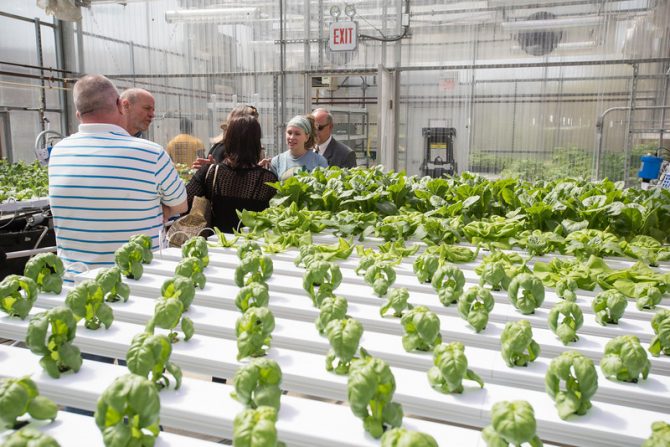
- FOOD PRODUCTION: providing campus-grown produce from the Presidents Park Hydroponic Greenhouse to campus dining halls
- ASSESSMENTS & CERTIFICATIONS: pursuing Green Restaurant Certification (GRC) for all campus dining halls (3-star GRC Achieved: Southside, Ike’s, The Globe, and The Spot to date), and pursuing higher levels of achievement for dining sections of AASHE STARS
- FOOD SECURITY: Committing to combating food insecurity, including donating over 3,000 to meal swipes per year; offering a percentage of True Burger revenue to donation; continuing the Coins4Change program, dedicating space in Southside Dining Hall for food rescue from 2026 on; supporting and coordinating work with Food Recovery Network and the Patriot Pantry, and with the help of internal partner CECiL, hiring two Food Rescue Fellows to support campus food rescue and student-led Food Recovery Network efforts; piloting other innovative initiatives or partnerships to address this issue collaboratively
- SUSTAINABILITY STAFFING: Hired of a full-time Sustainability Manager in Dining to improve sustainability performance, tracking, and expand critical initiatives
- WASTE & GHG FOOTPRINT REDUCTION: Reducing food waste through digital inventorying improvement and working with University Sustainability to assess; expanding percentage of plant-based meals; using reusable serviceware at all in-house dining and expanding ReusePass program/reusables at to-go retail dining locations; incorporating trayless dining which reduces consumer food waste; providing one-at-a time dispensers for serverware and napkins; implementing energy and water conservation measures into renovations and operations; working with Facilities and University Sustainability when undergoing building renovations
- WASTE DIVERSION: Expanding and reducing contamination rates of composting in dining halls; improving training and infrastructure/equipment to increase recycling and food scrap composting; recycling all kitchen oil waste
- SINGLE-USE PLASTICS REDUCTION: Preferring reusables; if single-use items are necessary, requiring 100% of single use items to be BPI and/or CMA Certified compostable items (to avoid PFAS) instead of single use plastics (SUP) or polystyrene for dining, catering, retail dining, and other Mason purchases. Ban on all SUP straws and bags, reduction/elimination whenever possible
- PLANT BASED FOOD: offering plant-based options at every meal and increasing plant based food purchase portion of menu to over 50%
- LOCAL & SUSTAINABLE FOOD: Purchasing more local and sustainable foods; increasing local (within 250 miles) food purchased to over 33%
How Can I Make an Impact?
Raising your self-awareness about eating less meat and having a more plant based diet, eating locally, checking food labels, and purchasing third party certified products such as certified organic, Fair Trade, or Marine Stewardship Council are some of the ways you can make a positive impact on the planet. Buying locally produced foods helps support the local farmers and economy, while also ensuring foods have not traveled hundreds of miles to arrive at your local supermarket.